
Cataract Treatment
Restore Your Precious Vision with Personalized Treatment & Advanced Care
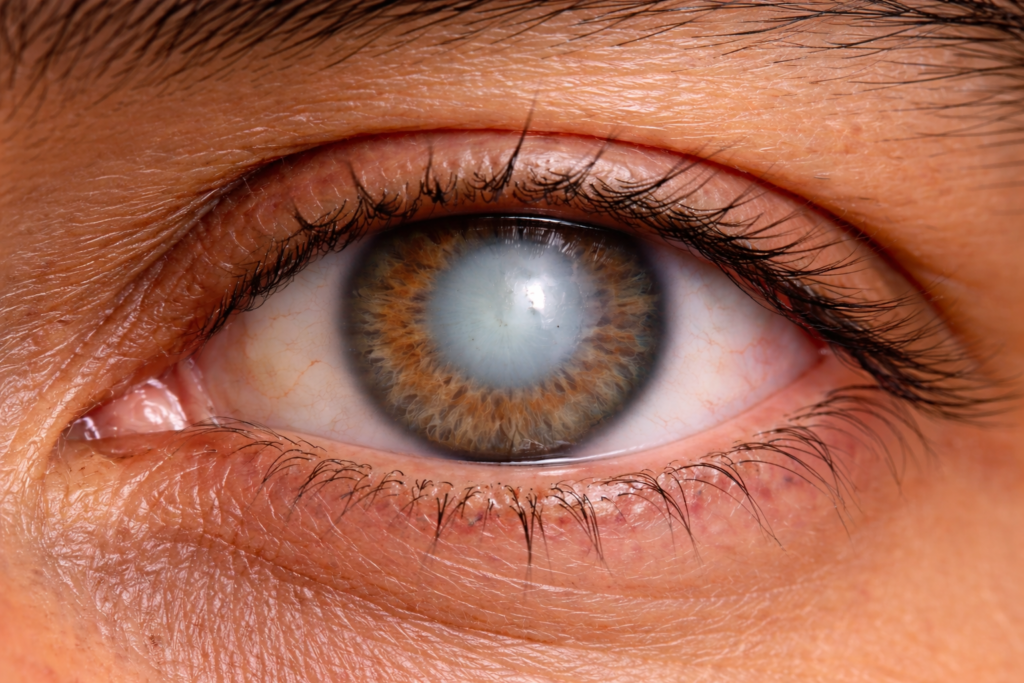
What is a Cataract?
A cataract occurs when the clear lens in your eye becomes cloudy. This makes your vision blurry or dull. It usually develops as you get older and can interfere with daily activities like reading or driving. You cannot treat cataracts with glasses or medicine. However, a simple yet skilled surgery can remove the cloudy lens and restore clear, sharp vision.
Cataract Symptoms You Might Notice
- Blurry or cloudy vision
- Difficulty seeing clearly at night
- Sensitivity to light or glare
- Colours appear faded or yellowish
- Frequent changes in eyeglass or contact lens prescription
- Halos around lights
- Double vision in one eye



When to See a Doctor?
If you notice any of these symptoms affecting your daily activities, such as reading, driving, or recognizing faces, it’s time to see an eye specialist. Early consultation can help manage the condition before it gets worse.
Need help with your eyes?
Our Treatment Approach
- We take a precise, technology-driven approach to cataract treatment. Each patient undergoes thorough diagnostics, including biometry, corneal topography, and optical coherence tomography (OCT).
- From these evaluations, we recommend a suitable lens, whether monofocal, multifocal, toric, or trifocal, based on your vision needs and lifestyle.
- Our surgeons use micro-incision techniques, which ensure accuracy, safety, and a quicker recovery.
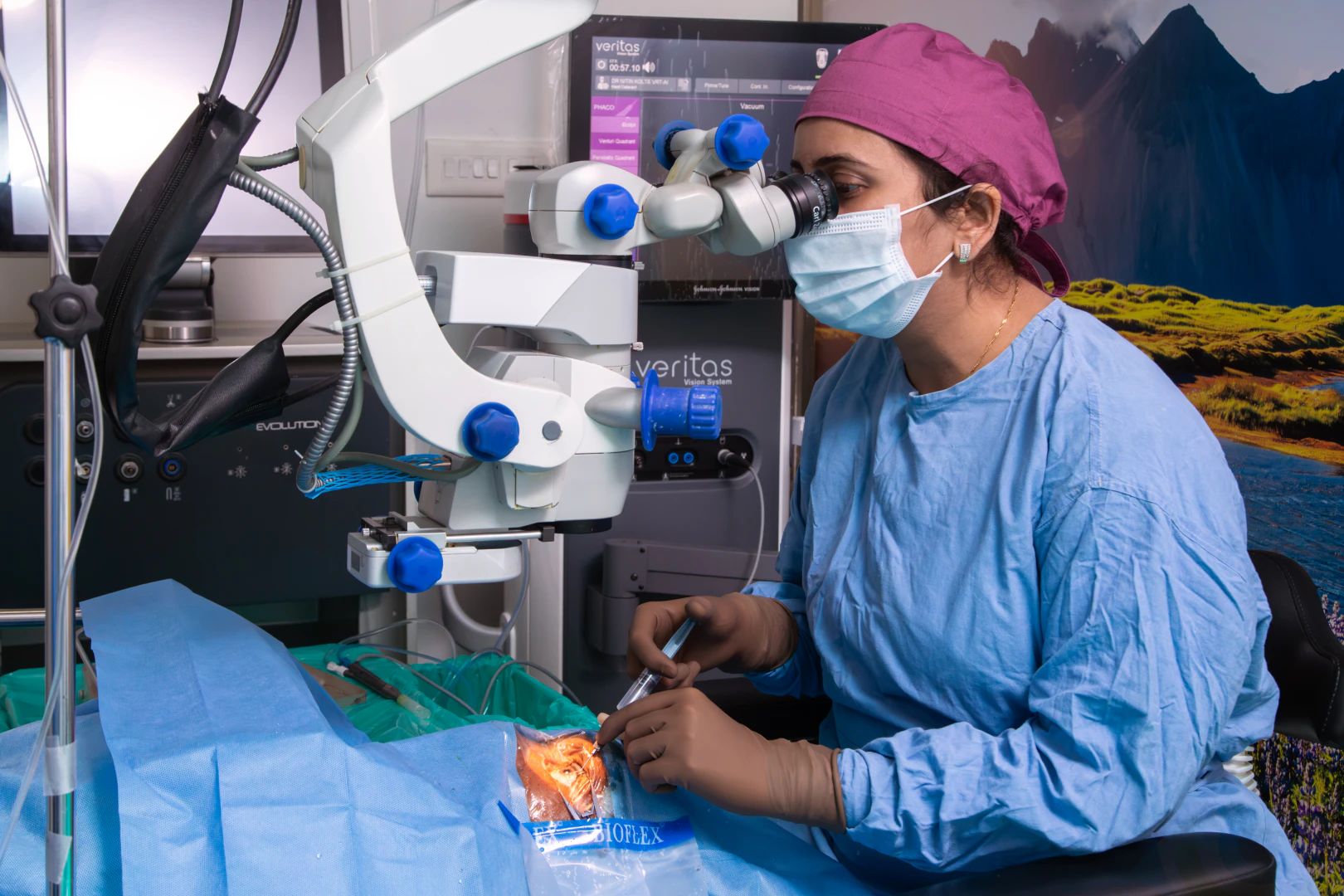
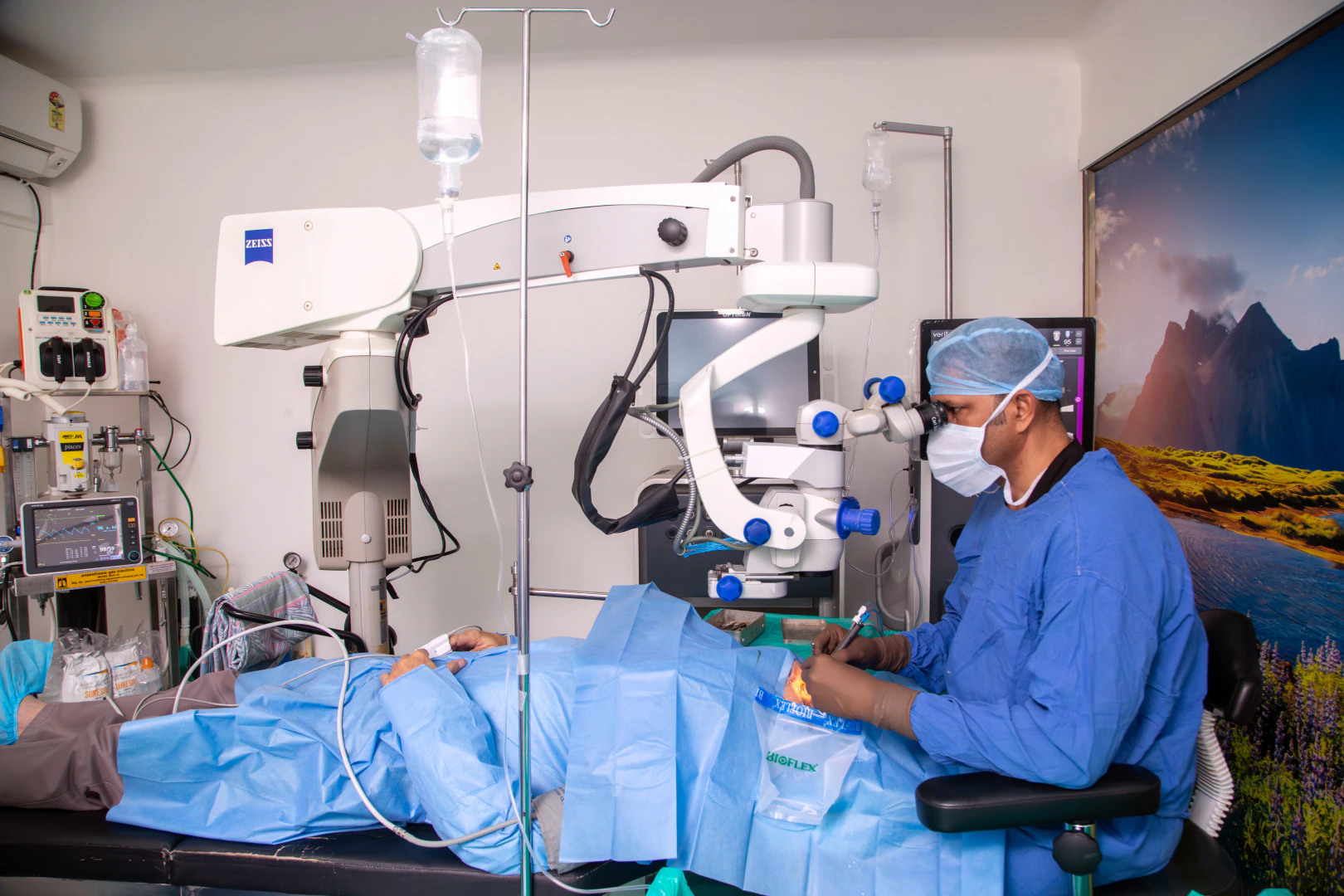
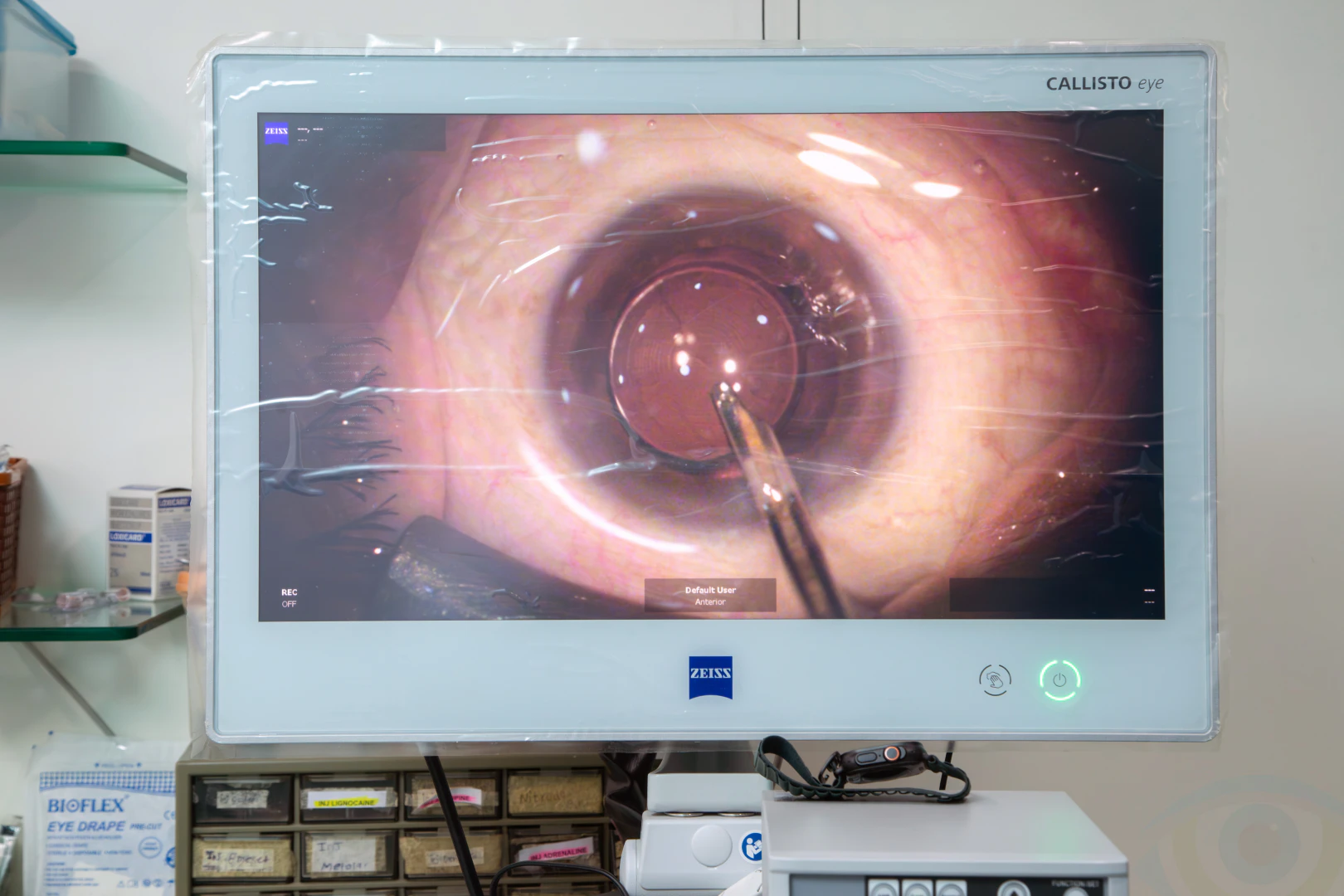
What is Premium Cataract Suite?
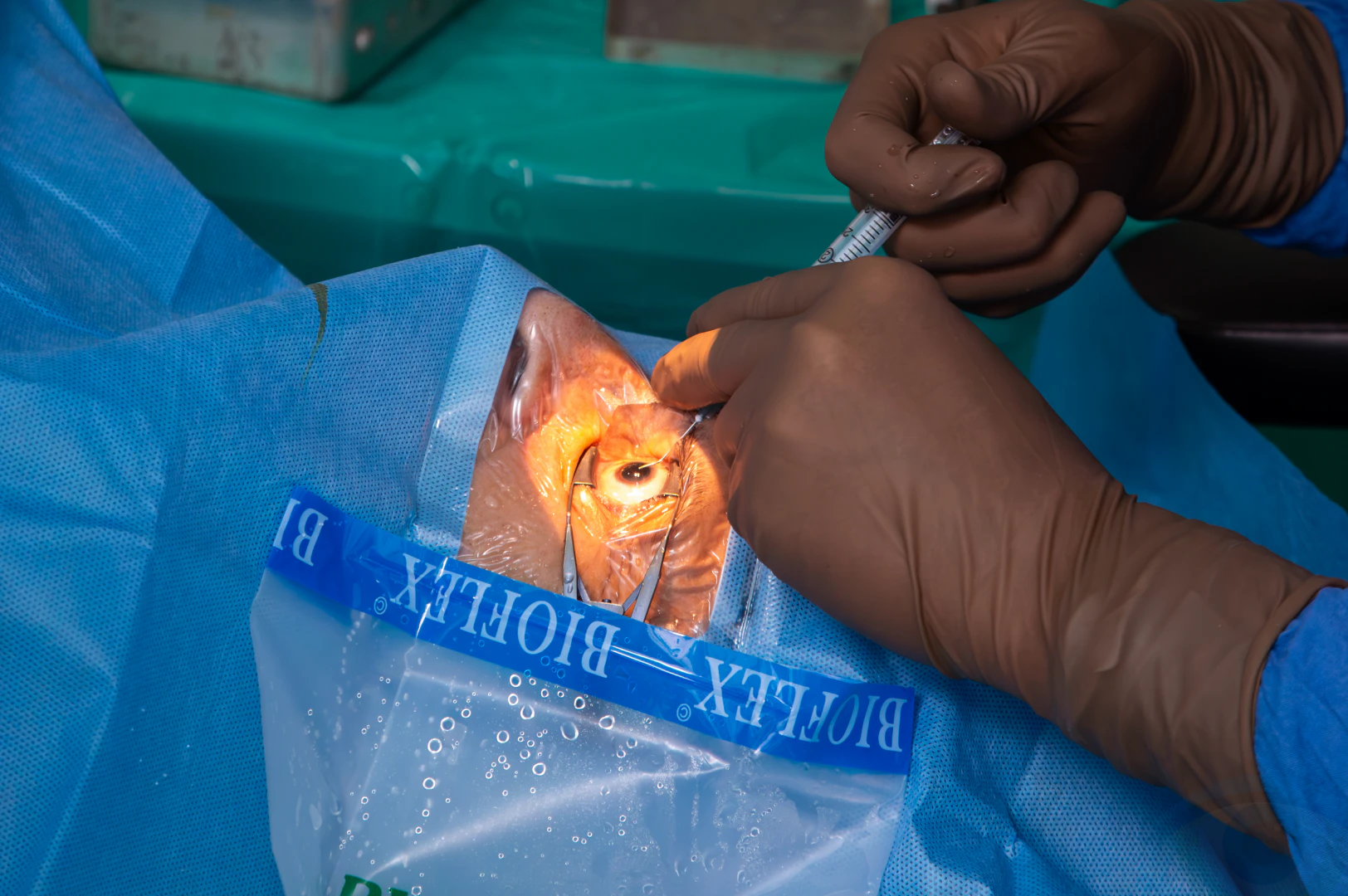
Premium Cataract Suite offers a comprehensive and highly precise cataract surgery experience through advanced diagnostics and cutting-edge technology. It includes a detailed clinical examination and accurate eye measurements using the state-of-the-art IOL Master 700, ensuring exceptional precision in lens power calculation. The Callisto guiding system enhances surgical accuracy by assisting in precise IOL placement, while the Veritas phaco machine enables a swift, smooth, and gentle phacoemulsification procedure. Together, these advanced systems provide a complete, modern, and highly refined solution for the latest and most advanced cataract surgery.
Chosen by Patients.
Trusted for Outcomes.
- Experienced eye surgeons with years of cataract expertise.
- Advanced diagnostics for customized treatment planning.
- Micro Incision Surgery and high-quality lens options.
- Quick recovery and minimal discomfort.
- Trusted care with personalized follow-ups.
- Proven track record and patient satisfaction.
FAQs
How common is cataract?
Cataracts are very common, especially as people age. In fact, untreated cataracts are the leading cause of reversible blindness worldwide. Fortunately, this condition is easy to treat with a simple surgical procedure, making vision restoration successful in most cases.
Who is at risk of developing cataracts?
- Older adults - aging is the most common cause.
- Genetic factors - rare cases can occur in infants or children due to enzyme or genetic disorders.
- Eye trauma or inflammation inside the eye.
- Prolonged UV exposure or radiation.
- Systemic conditions like diabetes and high blood pressure.
- Lifestyle factors - smoking, alcohol use, and obesity.
- Medications - long-term use of steroids, statins, or phenothiazines.
Why does a cataract need treatment?
Cataracts cause gradual vision loss that can interfere with daily tasks like reading, driving, or recognizing faces. If left untreated, cataracts can lead to complete blindness.
What are the different types of cataracts?
Nuclear Sclerotic Cataract
This type develops slowly and causes age-related clouding of the lens nucleus. At first, it may even improve reading vision temporarily.
Cortical Cataract
Opacities form around the outer edge of the lens. This type causes glare, light scatter, and poor depth perception. It is common in people with diabetes.
Posterior Subcapsular Cataract
This type affects the back of the lens. It progresses rapidly, impacts near vision, and causes glare or halos. It is often seen in people with diabetes or those who use steroids.
What tests are done to detect cataracts?
- Visual Acuity Test - This checks clarity of sight at various distances.
- Dilated Eye Exam - This enlarges the pupils to examine the retina and optic nerve.
- Slit Lamp Examination - This gives a detailed view of eye structures.
- IOL Master - This measures the eye length, corneal curve, and depth to choose the right intraocular lens.
- Additional tests - These may check glare sensitivity or color vision if needed.
- OCT - This gives detailed idea about the macula
What are the different types of cataract surgery?
Phacoemulsification (Phaco)
This modern, stitch-less surgery uses ultrasound to remove the lens, followed by implantation of a foldable IOL. Recovery is quick and downtime is minimal.
Micro Incision Cataract Surgery (MICS)
It is an advanced cataract procedure performed through a very small incision (usually less than 2 mm), reducing trauma to the eye.
It allows faster healing, and quicker visual recovery compared to traditional cataract surgery.
Small Incision Cataract Surgery (MICS)
This traditional technique uses a slightly larger incision (5 to 6 mm) with a self-sealing wound. No stitches are required.
What types of intraocular lenses (IOLs) are available?
Monofocal IOL – A standard intraocular lens that provides clear vision at one fixed distance (usually far), typically requiring glasses for near or intermediate tasks.
Advanced Monofocal IOL – An enhanced monofocal lens designed to improve contrast sensitivity and provide slightly better intermediate vision than a traditional monofocal lens.
Toric IOL – A lens specially designed to correct astigmatism.
Trifocal IOL – A premium intraocular lens that provides vision at three distinct distances: near, intermediate, and far.
EDOF IOL (Extended Depth of Focus) – A lens that creates a continuous range of vision from far to intermediate (and some near) by extending the focal point.
Multifocal IOL – A lens that splits light into multiple focal points to provide vision at more than one distance, typically near and far.
What happens before, during, and after cataract surgery?
Before Surgery:
- Measurements and tests help determine the right lens. You may need to stop taking certain medications temporarily.
- Dileted examination for cataract, retina evaluation & biometry counceling to decide type of lens.
During Surgery:
- Local anesthesia is used. A tiny incision is made, the cloudy lens is removed, and a new IOL is implanted. The procedure is usually painless and takes about 10 to 15 minutes.
After Surgery:
- You may feel mild discomfort, sensitivity to light, or watery eyes.
- Eye drops will be prescribed to help healing and prevent infection.
- Avoid rubbing your eye, lifting heavy objects, or bending forward for a few days.
- Vision improves gradually; most patients recover within 2 weeks.
Can cataract surgery have complications?
Cataract surgery is generally safe. However, very very rare complications can include:
- Infection, bleeding, or inflammation.
- Increased eye pressure or retinal detachment.
- Vision issues like double vision or glare.
- With prompt treatment, most issues can be resolved without causing long-term damage.
Are there any precautions to prevent cataracts?
- Wear UV-protective sunglasses outdoors.
- Quit smoking.
- Eat a diet rich in antioxidants, such as fruits and vegetables.
- Manage diabetes, blood pressure, and other health conditions.
- Maintain a healthy weight and limit alcohol intake.